There’s been a huge increase in social media posts about how:
- “The sun doesn’t cause skin cancer”
- “Sunscreen doesn’t prevent skin cancer”
- “Sunscreen causes skin cancer”
I’ve been asked by more than one person in real life: “How do I explain to someone that it’s not sunscreen, it’s the sun, it’s obviously the freaking sun?”
Here’s a summary of the main arguments and counterarguments – my video here explains this in more detail.
Related Post: Sunscreen myth directory
Argument 1: “Studies found sunscreen users get more skin cancer”
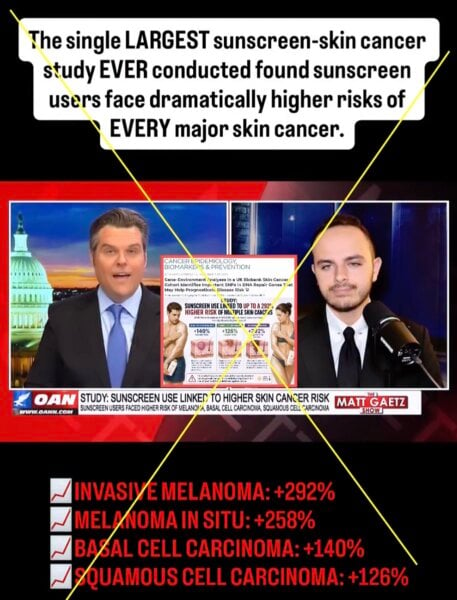
Example: The UK Biobank study, the basis of sensationalised posts like this:
Why it’s wrong
Correlation doesn’t imply causation, and in these studies it’s clear there’s another explanation.
This correlation is often seen in observational studies, where people are behaving like they normally would.
- People with more sun sensitive skin (light skin, red hair) are both more likely to get skin cancer, AND more likely to wear sunscreen (confounding by indication)
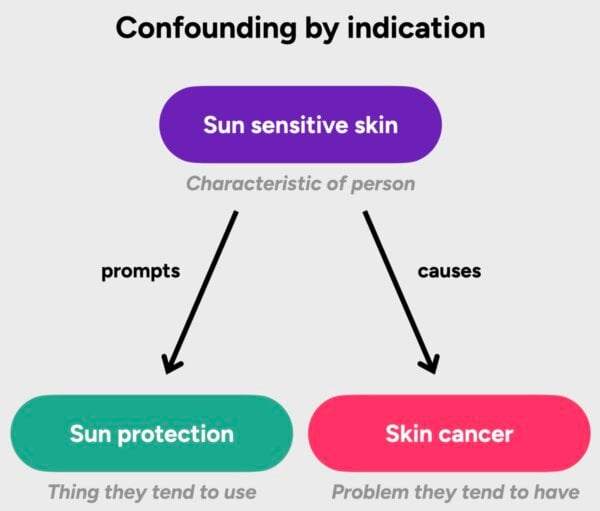
- Essentially, people with a problem are more likely to use things that help with that problem: owning stepladders is associated with increased risk of being short, bulletproof vest are linked to gunshot wounds, quitting smoking is linked to lung cancer, passing a driving test is linked to car accidents…
For UK Biobank study specifically:
- People filled in survey that asked “Do you wear sun protection (e.g. sunscreen lotion, hat) when you spend time outdoors in the summer?” – not actually about sunscreen use, researchers just abbreviated this question to “sunscreen”
- Fair skin, red hair, never tan and only burn, got sunburnt more as a kid = higher risk of skin cancer (points towards confounding by indication)
- People in study were also older = higher chance of past skin cancer, skin cancer survivors are also more likely to use sunscreen AND get subsequent skin cancers (this is mentioned in the paper itself)
- It’s unclear that researchers properly accounted for other risk factors, but because the multiple choice options in the survey are quite broad, the amount of adjusting that can be done is quite limited. It’s usually impossible to completely get rid of other factors even in observational studies with narrower options.
- The study authors have come out to say their study has been misinterpreted
(Thanks to Professor David Whiteman and Professor Rachel Neale for their help with this section – all mistakes remain mine)
The Nambour Trial
To get rid of these issues, we can look at experimental studies e.g. randomised controlled trials (RCTs) instead.
- These are essentially just trying to run as fair a test as possible
- Everything is kept as similar as possible except for one thing that’s changed (independent variable), so any differences seen are likely to be due to that thing
- Setting up groups in advance reduces self-selection problems e.g. more redheads in the “more sunscreen” group, people who hate the beach in the “less sunscreen group” (unlike observational studies)
The best RCT on sunscreen and skin cancer is the Nambour Trial
- 1621 people from Nambour, Queensland split into 2 roughly equivalent groups
- For 4.5 years, one group wore sunscreen every day (daily sunscreen use), the other group wore sunscreen when they wanted to (discretionary sunscreen use)
- Skin cancer-related factors were tracked during the trial, and for ~10 years afterwards
Daily sunscreen users had:
- 40% reduction in squamous cell carcinomas (SCCs) during trial (4.5 years)
- New SCC and SCC incidence ~1/3 lower 8 years later
- 22% reduction of actinic keratoses in first 2 years
- Invasive melanomas reduced by 73% over 15 years
- Average invasive melanoma thickness 0.53 mm (daily sunscreen) vs 1.2 mm (not daily)
- No detectable increase in skin aging after 4.5 years
- 24% less likely to show increased aging
Nambour trial results are actually more impressive than it might appear:
- Many skin cancers have a long latency time (they show up at age 60+, even though many are linked to e.g. sun exposure from childhood), so it makes sense that results weren’t as clearcut for basal cell carcinomas and melanomas
- They looked at daily vs discretionary sunscreen, not daily vs no sunscreen
- They used an SPF 16 sunscreen from the 1990s with older, less photostable filters (avobenzone and octinoxate)
- Average age in Nambour trial was ~50 – so it shows that changing your sunscreen habits for just 4.5 years in your 50s can result in big change in skin cancer risk
Why is the Nambour trial the only large, long-term RCT on sunscreen?
- From Prof David Whiteman, who worked on the Nambour trial for his PhD: “ The reason there’s only one of these studies is they’re so hard to do. They are so expensive. They take so much effort and so much leadership and so much follow up that no one’s going to have the gumption to ever do one of these again. So it’s only ever going to be one randomized trial on sunscreen, I would put a massive bet on that.”
Argument 2: “Skin cancer rates have gone up”
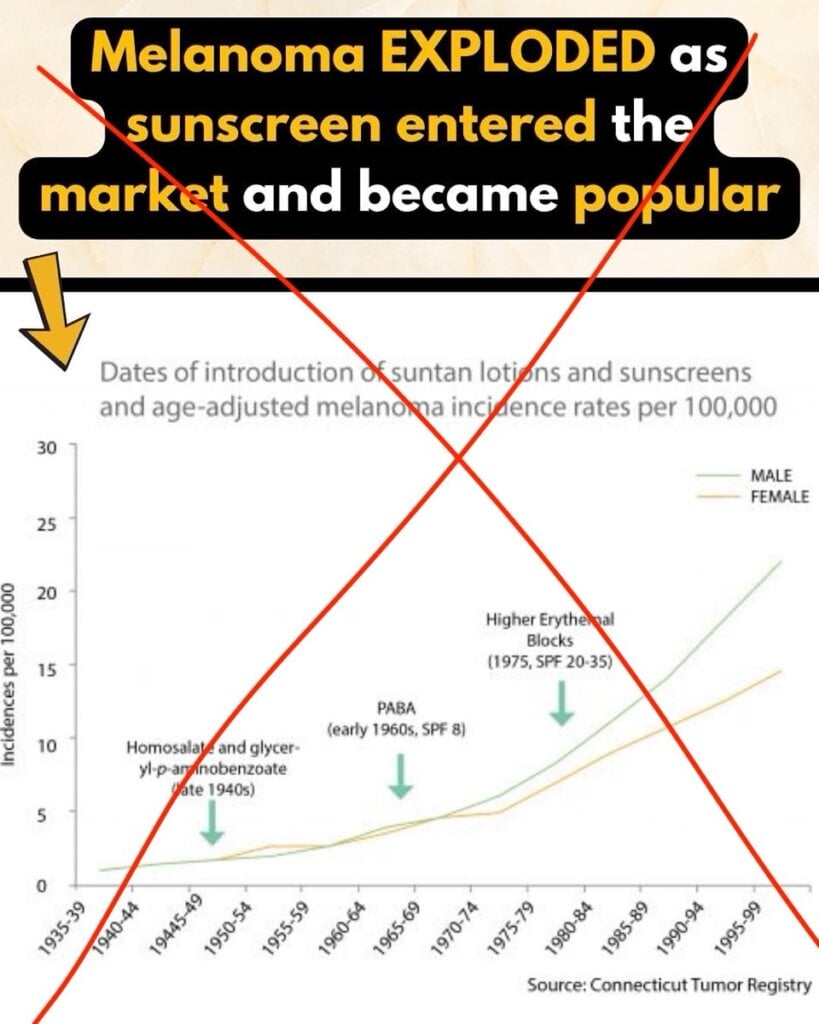
Example: Connecticut cancer registry graph, which supposedly shows skin cancer increasing with sunscreen use
Why it’s wrong
The graph simply shows an increase in melanomas diagnosed since the 1940s.
- The 2 lines aren’t sunscreen and melanoma rates, it’s male vs female melanomas – so it’s not actually showing a correlation with sunscreen use
- Many things increased since the 1930s (more electricity use, eating more chocolate…)
- The first sunscreens came out in the 1940s, but sunscreens weren’t really popular until the 1970s, so there isn’t necessarily a correlation with sunscreen use (the rise since the 1970s is just a continuation of the older trend)
- Even if there was a correlation, many correlations are coincidental e.g. melanoma rates correlate really well with babies named Mariam
Again, when we control more variables like in experimental studies (e.g. the Nambour trial), increased sunscreen use doesn’t correlate with increased skin cancer.
There are many other things that changed since the 1940s that explain increased skin cancer rates better:
- Increased life expectancy
- Living longer increases all cancer rates = more chances for cells to mess up (cancer is just cells multiplying out of control)
- Average age of melanoma diagnosis is 65, more people are living long enough to get counted
- Changed patterns of sun exposure
- Short bursts of intense sun exposure is linked to many types of skin cancer that have increased
- Travel has become a lot cheaper – more people are going to the beach, including during their normal winters (so they’re getting 2 summers a year)
- Fashion
- More exposed skin than in the past
- Tanning is more fashionable e.g. tanning beds introduced in 1970s, strongly linked to skin cancer
- Increased education, screening and detection
- Education campaigns e.g. ABCDEs of questionable spots
- Diagnostic definitions have changed
- Evidence for increased pickup: deadly skin cancers have become a smaller fraction of those detected
Skin cancer hasn’t increased for everyone
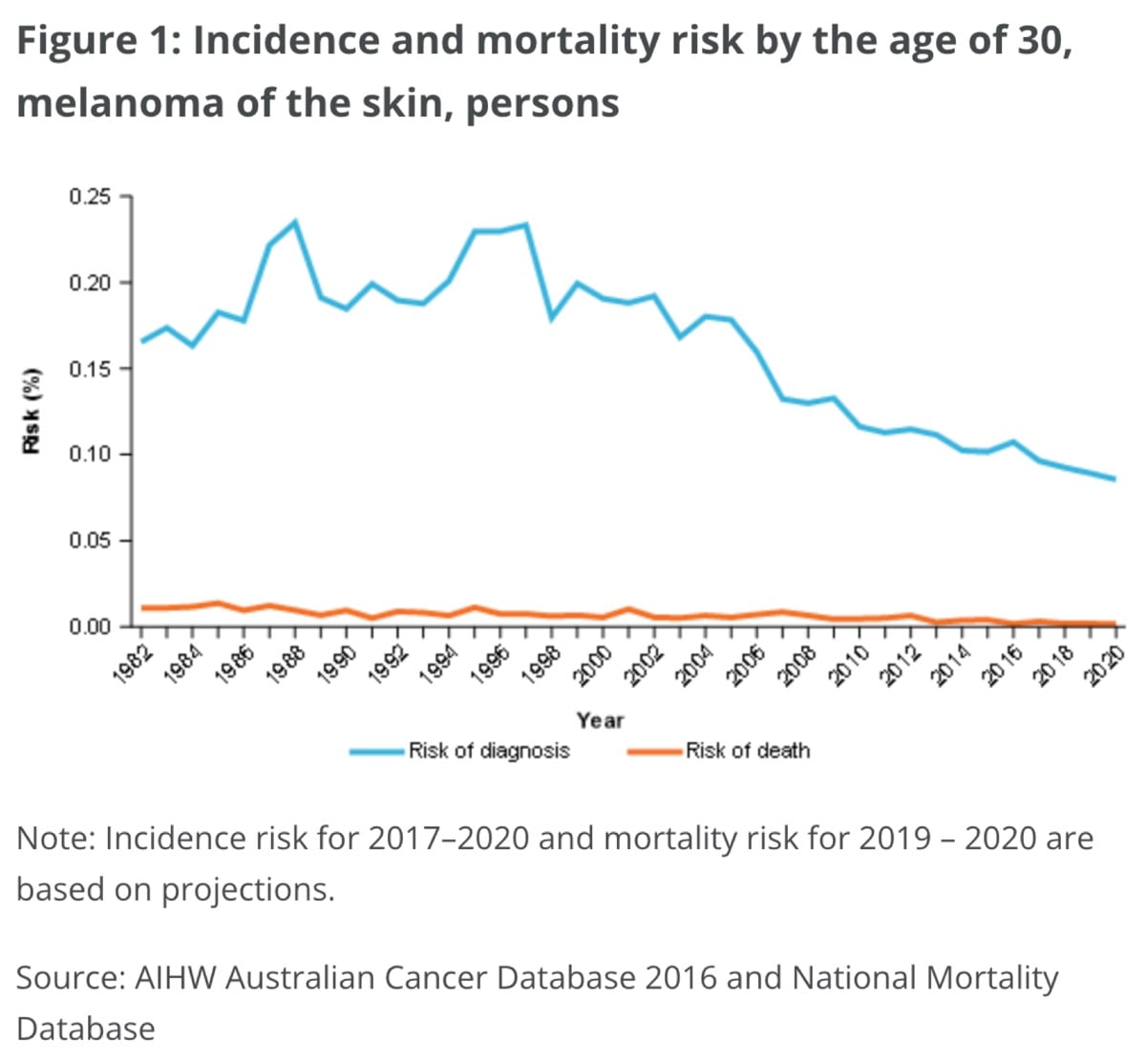
- e.g. Skin cancer rates have gone down for younger Australians, including if you just look at light-skinned people (higher risk ancestry)
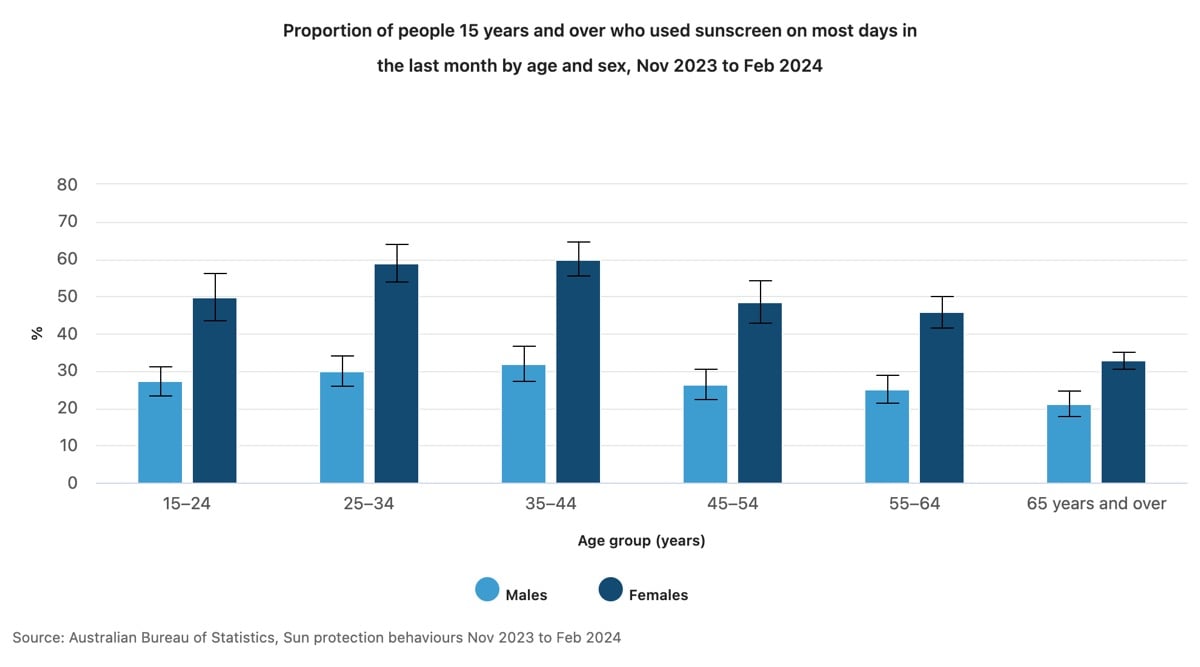
- Younger Australians also wear more sunscreen than older Australians (probably due to SunSmart campaigns, Slip Slop Slap etc)
- Line should be going up if sunscreen caused more skin cancer, but it isn’t
Related Post: Why are skin cancer rates rising with more sunscreen?
Argument 3: “Sunscreens don’t protect against UVA”
Example: “Most sunscreens are only designed to block UVB and prevent sunburns, but UVA isn’t blocked – UVA goes deeper and is linked to skin cancer, so sunscreens give you an artificial sense of safety and you spend more time in the sun.”
Why it’s wrong
UVB is worse than UVA for skin cancer, although both are harmful
- UVB is more strongly associated with skin cancer than UVA
- UVB has energetic particles that cause DNA changes linked to skin cancer (e.g. cyclobutane pyrimidine dimers (CPDs))
- UVB is also probably a bigger cause of skin aging as well
- UVB does penetrate into the dermis
The vast majority of sunscreens have been broad spectrum for decades
- Research on the dangers of UVA started coming 0ut in the 1970s, legal definitions of “broad spectrum” came out in the 1990s
- In Australia it’s a legal requirement for “proper” sunscreens (e.g. lotions) to be broad spectrum – exceptions are things like SPF blushes and foundations
- The US regulates sunscreens differently so it’s not a bad idea to look for broad spectrum on the label, but it’s still rare to find a “proper” sunscreen lotion that isn’t broad spectrum
Related Post: Why you should protect your skin from UVA (and how)
Sunscreen misuse is a problem – the solution is better education, not avoiding sunscreen use
- Papers from the 1990s showed “sunscreen abuse” – sunbathers wore sunscreen so they could tan for longer without burning, and ended up with more sun exposure
- But this was only in some studies, mostly with “sun worshippers”
- There is some evidence for a “sunscreen paradox” – sunscreen can give a false sense of security compared to other forms of sun protection
- But Nambour trial only increased sunscreen use and saw decreased skin cancer, so clearly this isn’t always a problem
- Best approach = educate on correct use, restrict sunscreen types that encourage underuse (e.g. sprays, sticks), and educate on layering sun protection e.g. Slip Slop Slap Seek Slide in Australia
Related post: Do sunscreen sprays actually work? The science
How do we know sunscreens prevent skin cancer?
We have a consistent body of evidence, with many different types of evidence (both observational and experimental, on humans, in animals, in test tubes…), to show that sunscreens prevent skin cancer, and prevent things that lead to skin cancer.
This doesn’t exist for sunscreens causing skin cancer – the only real evidence are observational studies where:
- people who use sunscreen are more likely to be in the sun
- people who use sunscreen more prone to skin cancer
- people are using sunscreen badly
Short route
Medium route
Sunscreens block UV, UV causes skin cancer
Sunscreens block UV:
- Sunscreen absorbs UV in machines see e.g. absorbance curves

UV causes skin cancer, including in situations where there isn’t more sunscreen
- With sunscreen:
- Higher skin cancer rates as you go closer to equator
- More skin cancers found in sun exposed areas (e.g. head, neck)
- Higher skin cancer rates in lighter skin than darker skin
- More sun exposure increases moles, which are linked to increased melanoma risk
- Higher rates of most skin cancers in outdoor workers
- Without sunscreen:
- Skin cancer is common in places that get sun exposure, but are often skipped with sunscreen e.g. eyelids, ears, scalp, lips
- More sunburns are linked to more melanoma
- Tanning beds which produce UV are linked to skin cancer
- Animal studies
- Anecdotes – many people with skin cancer didn’t wear sunscreen before their diagnoses e.g. Belinda Shipman (anecdotes aren’t great scientific evidence, but they tend to be convincing)
Long route
We can break down the process of UV causing skin cancer into smaller steps to separate UV and sunscreen:
UV exposure → Microscopic skin changes → Visible skin changes → Skin cancer
We have have evidence that sunscreen decreases all these steps – these are like checkpoints on the way.
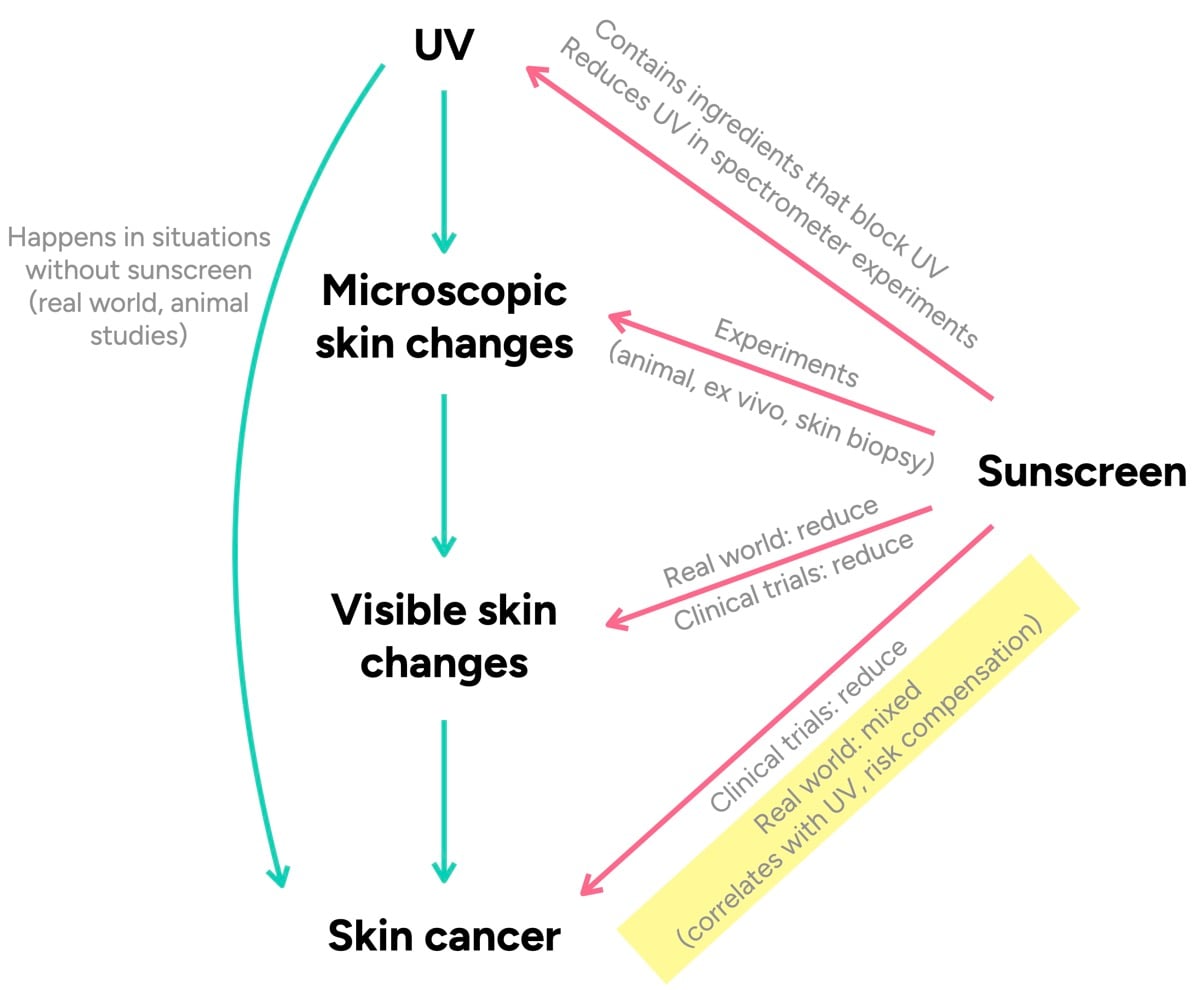
UV is energetic enough to cause chemical reactions:
- e.g. clothes and ink fade in sunlight, paintings are protected with UV-resistant glass, UV used to set fillings and gel nail polish (these use much lower levels of UV than the sun)
- UV causes chemical reactions in skin, including DNA mutations linked to cancer – body naturally repairs these, but can’t necessarily undo it all (some mutations can lead to cancer)
Sunscreen blocks UV
- e.g. UV absorbance curves
Sunscreen prevents microscopic skin changes that lead to skin cancer:
- e.g. study where different amounts of sunscreen were applied to human skin, then exposed to UV lamp before skin samples were taken. Areas with more sunscreen had less damaged DNA (thymine dimers)
- Review of 10 studies on sunscreen use on human skin and reduced DNA damage (summary table on pages 10-11 of open access version)
- Other microscopic skin changes that have been studied in human skin: inflammation, gene expression, immune cell activation
- Also lots of studies in animals and in vitro
Sunscreen prevents visible skin changes linked to skin cancer:
- Sunscreens prevent sunburn
- More sunburns linked to skin cancer
- Lots of real world evidence when you skip a spot with sunscreen, SPF testing for sunscreens
- Randomised controlled trial on 431 subjects in Maryborough, Victoria
- SPF 17 sunscreen vs placebo cream over 7 months (one summer)
- Sunscreen use led to less actinic keratoses (scaly spots that often turn into skin cancers)
- Randomised controlled trial on 37 subjects in Lubbock, Texas
- SPF 29 sunscreen vs placebo cream over 2 years
- Sunscreen use led to less actinic keratoses
- Randomised controlled trial on 309 children in Vancouver, BC
- SPF 30 sunscreen when in sun for 30+ min vs no sunscreen advice over 3 years
- Sunscreen use led to less new moles (linked to melanoma)
Sunscreen prevents skin cancer: Nambour Trial
Other myths for why sunscreens cause skin cancer
“Sunscreens contain benzene”
Benzene is linked to other cancers (e.g. blood cancers), not skin cancer.
Amounts of benzene in sunscreen aren’t a concern:
- It’s not an ingredient in sunscreens – it was a contaminant at very low levels (recalls were very precautionary)
- The finding was announced by Valisure, a laboratory that works closely with class action lawyers and have historically been bad at measuring things
Related Post: Benzene in your products, Part 2: The story of Valisure
Even with Valisure’s likely too-high numbers, the amounts of benzene aren’t expected to cause any noticeable health effects
- Benzene doesn’t pass through skin easily, main route of exposure is through breathing (enters bloodstream through lungs)
- Amount of benzene inhaled at a petrol station for 5 minutes = 9.4-304 ug
- Amount of benzene inhaled if a shotglass of the most contaminated sunscreen (6.26 ppm) went through your lungs before you applied it = 187.8 ug
A 2022 analysis found that people who never wore sunscreen had higher blood benzene levels than people who did.
Related post: Benzene in your products, Part 1: Bad science
“Sunscreen kills coral reefs”
Coral is very sensitive, far more sensitive than humans. But the idea that sunscreen kills coral reefs is a myth.
The 2015 study often cited to support chemical sunscreen bans was questionable:
- Researchers only used one water sample for many of their environmental measurements, instead of standard 3-5
- When measuring toxic levels of sunscreen, used a solvent (DMSO) that makes coral absorb more sunscreen
- Questionable analytical methodology
The National Academies gathered a team of coral experts and published a huge review in 2022 and concluded that the bans on chemical sunscreens were not based on good science.
When we take all the research into account, the big threat to coral isn’t sunscreen: it’s climate change and pollution.
Related Post: Is Your Sunscreen Killing Coral Reefs? The Science
“Sunscreen absorb into the blood/The US FDA says they’re not safe”
Tiny amounts of chemical sunscreens do absorb into the blood. But this is true for all the substances we interact with.
These worries are based on results from US FDA studies, but they’re not actually a cause for concern:
- Very low amounts of chemical sunscreen were found in blood after heavy use
- A few micrograms in most cases (e.g. 0.0116 mg avobenzone or 0.78 mg oxybenzone after applying all over body 13 times over 4 days)
- The finding was important because the US FDA regulates sunscreens in an unusual way – prior to this, the US FDA assumed no absorption
- This led to the FDA recognising chemical sunscreens as generally recognised as safe and effective (GRASE) for now, but have proposed changing this unless companies provide new data
- This included animal studies, which is a problem because sunscreens are cosmetics in many other regions (e.g. the EU), where there are animal testing bans for cosmetics
- There are ongoing discussions with the FDA about alternative non-animal data that can be used instead
Related Post: Sunscreens in your blood??! That FDA study, More Sunscreens in Your Blood??! The New FDA Study
However, other regions have assessed chemical sunscreen safety with absorption in mind for decades. Allowed levels of absorption vary by region, but in general there’s a 100-fold margin of safety:
- Calculate amount of ingredient which has little or no impact for heavy sunscreen users (benchmark does e.g. NOAEL)
- This is divided by 100 to work out the maximum allowed level
- The calculation often includes aggregate exposure (adding up the amounts from multiple products someone might use daily)
Related post: US Sunscreens Aren’t Safe in the EU? The Science
“Sunscreen contains hormone disruptors”
Endocrine disruptors in beauty products are not the scary problem they might sound like – they don’t necessarily disrupt your hormones.
- For cosmetic regulations, “endocrine disruptor” usually means an ingredient can weakly bind to a hormone receptor in assays where there’s nothing else competing for the receptor, unlike in your body
- Actual hormones bind very strongly to receptors and have a strong effect
- These are unlikely to disrupt hormones at realistic doses – the concentrations are just far too low to do much (due to huge margin of safety used for safety assessments)
- Your body has many substances that bind more strongly to receptors, at higher concentrations
There is one sunscreen ingredient (4-MBC) being phased out in the EU due to potential endocrine disruption, but this is due to lack of data to calculate the new use level, not because it’s likely to be harmful
Related Post: Sunscreen absorption and receptor binding: Debunking TikTok Misinformation
There’s a myth that “the dose makes the poison” doesn’t apply to endocrine disruptors
- Some studies reported higher effects at lower doses for endocrine disruptors (low dose non-monotonic effects)
- But more recent analyses have reported that a lot of these findings seem to be caused by experimental error
Related Post: Factcheck: Low-Tox Sunscreen Swaps?
“Sunscreens contain retinyl palmitate”
Retinyl palmitate is a form of vitamin A that’s been claimed to cause skin cancer because it forms free radicals in sunlight, which can attack things like DNA.
- UV also forms free radicals and gets deeper in the skin
- Retinyl palmitate breaks down and forms free radicals when tested alone in lab studies, but this doesn’t seem to happen in sunscreen or in skin
- Other retinoids which also break down in test tube studies are actually prescribed by dermatologists to prevent skin cancer
- People who use retinoids aren’t more prone to skin cancer
- A study found that hairless mice treated with retinyl palmitate cream did have more tumours, but the study had weird results – it’s thought that another ingredient in the cream caused the tumours
- Free radicals also cause skin aging – we have lots of evidence that sunscreens are linked to less skin aging (e.g. Nambour trial)
Related Post: Should you avoid retinyl palmitate in sunscreens?
“Sunscreen blocks vitamin D”
This concern comes from a new study where people who wore daily SPF 50+ had a higher risk of vitamin D deficiency. However:
- The daily SPF 50+ group still had more vitamin D in summer, so it wasn’t blocked completely
- Many people who wore less sunscreen were also vitamin D deficient in winter
- A lot of deficiency is best explained by people staying inside and covering up in winter
UV increases vitamin D for the same reasons it’s bad for you — it’s energetic enough to break chemical bonds. For people with light skin, the best balance is still probably using sunscreen when the UV index is set to reach 3 or over.
Related Post: Sun Protection and Vitamin D Deficiency
References
Australian Bureau of Statistics. Sun protection behaviours. 2024. ABS. Nov-2023-to-Feb-2024. Australian Government.
Australian Institute of Health and Welfare. 2026. Cancer data in Australia. AIHW. Australian Government.
Autier, P. Sunscreen Abuse for Intentional Sun Exposure. Br J Dermatol. 2009;161:40–45. doi:10.1111/j.1365-2133.2009.09448.x.
Borgert CJ, Burgoon LD, Matthews JC. The physiological and biochemical basis of potency thresholds modeled using human estrogen receptor alpha: implications for identifying endocrine disruptors. Arch Toxicol. 2024;98(6):1795-1807. doi:10.1007/s00204-024-03723-4
Cancer Council. Skin Cancer Statistics and Issues Prevention Policy: Solariums. 2020.
Cancer Council. Skin Cancer Statistics and Issues Prevention Policy: Risk factors/epidemiology. August 2022.
Chang MS, Moore KJ, Trepanowski N, Koru-Sengul T, Hartman RI. Sunscreen use is not associated with increased blood concentrations of benzene among adults in the United States: Data from the National Health and Nutrition Examination Survey 2003-2006 and 2009-2018. J Am Acad Dermatol. 2022;87(2):440-443. doi:10.1016/j.jaad.2021.09.003
Darlington S, Williams G, Neale R, Frost C, Green A. A randomized controlled trial to assess sunscreen application and beta carotene supplementation in the prevention of solar keratoses. Arch Dermatol. 2003;139(4):451-455. doi:10.1001/archderm.139.4.451
Dennis LK, Vanbeek MJ, Beane Freeman LE, Smith BJ, Dawson DV, Coughlin JA. Sunburns and risk of cutaneous melanoma: does age matter? A comprehensive meta-analysis. Ann Epidemiol. 2008;18(8):614-627. doi:10.1016/j.annepidem.2008.04.006
Downs CA, Kramarsky-Winter E, Segal R, et al. Toxicopathological Effects of the Sunscreen UV Filter, Oxybenzone (Benzophenone-3), on Coral Planulae and Cultured Primary Cells and Its Environmental Contamination in Hawaii and the U.S. Virgin Islands. Arch Environ Contam Toxicol. 2016;70(2):265-288. doi:10.1007/s00244-015-0227-7
EFSA Scientific Committee, More S, Benford D, et al. Opinion on the impact of non-monotonic dose responses on EFSA’s human health risk assessments. EFSA J. 2021;19(10):e06877. doi:10.2903/j.efsa.2021.6877
Gallagher RP, Rivers JK, Lee TK, Bajdik CD, McLean DI, Coldman AJ. Broad-spectrum sunscreen use and the development of new nevi in white children: A randomized controlled trial. JAMA. 2000;283(22):2955-2960. doi:10.1001/jama.283.22.2955
Green A, Williams G, Neale R, Hart V, Leslie D, Parsons P, Marks GC, Gaffney P, Battistutta D, Frost C, Lang C, Russell A. Daily sunscreen application and betacarotene supplementation in prevention of basal-cell and squamous-cell carcinomas of the skin: a randomised controlled trial. Lancet. 1999 Aug 28;354(9180):723-9. doi:10.1016/S0140-6736(98)12168-2.
Green AC, Williams GM, Logan V, Strutton GM. Reduced melanoma after regular sunscreen use: randomized trial follow-up. J Clin Oncol. 2011;29(3):257-263. doi:10.1200/JCO.2010.28.7078
Green AC, Wallingford SC, McBride P. Childhood exposure to ultraviolet radiation and harmful skin effects: epidemiological evidence. Prog Biophys Mol Biol. 2011;107(3):349-355. doi:10.1016/j.pbiomolbio.2011.08.010
Hughes MC, Williams GM, Baker P, Green AC. Sunscreen and prevention of skin aging: a randomized trial. Ann Intern Med. 2013;158(11):781-790. doi:10.7326/0003-4819-158-11-201306040-00002
Jeremian R, Xie P, Fotovati M, Lefrançois P, Litvinov IV. Gene-Environment Analyses in a UK Biobank Skin Cancer Cohort Identifies Important SNPs in DNA Repair Genes That May Help Prognosticate Disease Risk. Cancer Epidemiol Biomarkers Prev. 2023;32(11):1599-1607. doi:10.1158/1055-9965.EPI-23-0545
Lee C. Skin cancer study distorted to sow sunscreen doubt. TheNewDailyAU. July 15, 2026.
Matta MK, Zusterzeel R, Pilli NR, et al. Effect of Sunscreen Application Under Maximal Use Conditions on Plasma Concentration of Sunscreen Active Ingredients: A Randomized Clinical Trial. JAMA. 2019;321(21):2082-2091. doi:10.1001/jama.2019.5586
Matta MK, Florian J, Zusterzeel R, et al. Effect of Sunscreen Application on Plasma Concentration of Sunscreen Active Ingredients: A Randomized Clinical Trial. JAMA. 2020;323(3):256-267. doi:10.1001/jama.2019.20747
National Academies of Sciences, Engineering, and Medicine. Review of Fate, Exposure, and Effects of Sunscreens in Aquatic Environments and Implications for Sunscreen Usage and Human Health. 2022. Washington, DC: The National Academies Press. doi: 10.17226/26381. United States Government.
Natsch A. Scientific discrepancies in European regulatory proposals on endocrine disruptors-REACH regulation quo vadis?. Arch Toxicol. 2021;95(11):3601-3609. doi:10.1007/s00204-021-03152-7
Naylor MF, Boyd A, Smith DW, Cameron GS, Hubbard D, Neldner KH. High sun protection factor sunscreens in the suppression of actinic neoplasia. Arch Dermatol. 1995;131(2):170-175. doi: 10.1001/archderm.1995.01690140054008
Neale R, Duarte Romero B, Tran V. If I use SPF50+ sunscreen every day do I need to take vitamin D? The Conversation. September 18, 2025.
Olsen CM, Wilson LF, Green AC, Biswas N, Loyalka J, Whiteman DC. Prevention of DNA damage in human skin by topical sunscreens. Photodermatol Photoimmunol Photomed. 2017;33(3):135-142. doi: 10.1111/phpp.12298
Olsen CM, Pandeya N, Rosenberg PS, Whiteman DC. Incidence of in Situ vs Invasive Melanoma: Testing the “Obligate Precursor” Hypothesis. J Natl Cancer Inst. 2022;114(10):1364-1370. doi:10.1093/jnci/djac138
Pfeifer GP, Besaratinia A. UV wavelength-dependent DNA damage and human non-melanoma and melanoma skin cancer. Photochem Photobiol Sci. 2012;11(1):90-97. doi:10.1039/c1pp05144j
Rosso S, Zanetti R, Martinez C, et al. The multicentre south European study ‘Helios’. II: Different sun exposure patterns in the aetiology of basal cell and squamous cell carcinomas of the skin. Br J Cancer. 1996;73(11):1447-1454. doi:10.1038/bjc.1996.275
Tewari A, Grage MM, Harrison GI, Sarkany R, Young AR. UVA1 is skin deep: molecular and clinical implications. Photochem Photobiol Sci. 2013;12(1):95-103. doi:10.1039/c2pp25323b
Thompson SC, Jolley D, Marks R. Reduction of solar keratoses by regular sunscreen use. N Engl J Med. 1993;329(16):1147-1151. doi:10.1056/NEJM199310143291602
Tran V, Duarte Romero BL, Andersen H, et al. Effect of daily sunscreen application on vitamin D: findings from the open-label randomized controlled Sun-D Trial. Br J Dermatol. 2025;193(6):1128-1137. doi:10.1093/bjd/ljaf310
Whiteman DC, Neale RE, Baade P, Olsen CM, Pandeya N. Changes in the incidence of melanoma in Australia, 2006-2021, by age group and ancestry: a modelling study. Med J Aust. 2024;221(5):251-257. doi:10.5694/mja2.52404
Young AR, Greenaway J, Harrison GI, et al. Sub-optimal Application of a High SPF Sunscreen Prevents Epidermal DNA Damage in Vivo. Acta Derm Venereol. 2018;98(9):880-887. doi:10.2340/00015555-2992
Young AR. Common false statements on the effects of sun and sunscreens. Br J Dermatol. 2025;193(3):577-578. doi:10.1093/bjd/ljaf183